




Cookies help us deliver our services. By using our services, you agree to our use of cookies.
Description
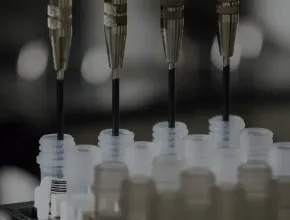
A sample concentrator (vacuum or nitrogen-based) is an instrument used to remove solvents and concentrate liquid samples, primarily in chemical, pharmaceutical, and biotechnology laboratories. Vacuum concentrators operate by combining three principles: vacuum, controlled heating, and centrifugal force. In contrast, nitrogen sample concentrators combine controlled heating with continuous and uniform nitrogen flow, enabling efficient solvent evaporation. These systems allow for effective solvent evaporation without degrading heat-sensitive substances and are widely used for concentrating DNA, RNA, proteins, and chemical compounds following extraction or purification processes.
Nitrogen sample concentrator:
Specifications of the various available models:
- Temperature control up to 70 or 80 ºC, depending on the model;
- Evaporates 0.5 mL of methanol in 6 minutes;
- Compatible with deep well plates and vials;
- Requires nitrogen supply: 10–30 psi;
- Suitable for 24–96 well plates or 24–384 well plates. Which do you require?
- Do you require a model that accommodates plates and vials up to 15 cm in height?
- Do you require a model with a gas exhaust tube for operation outside a fume hood?
- Specify required accessories: manifold with 96 straight or spiral needles, 384 straight needles, 24 straight needles, or 48 straight needles.
Vacuum concentrator:
Specifications of the various models available:
- Temperature control (35 °C to 65 °C);
- Preheating system;
- Glass lid;
- Adjustable speed (1700, 2500, 5000 rpm);
- Maximum vacuum: 80 mbar;
- Maximum flow: 5.5 L/min;
- Pressure: 2.5 bar/g;
- Timer up to 99h59;
- Capacity: 42 x 0.5 mL; 24 x 1.5 mL; 16 x 10 mL; 12 x 15 mL; 8 x 30 mL. Which one do you want?
Please inform us of the desired specifications and our team will recommend the most suitable equipment.
Similar Products

Mini vortex centrifuges
Centrifuge/vortex mixers that combine rapid centrifugation and vortex agitation for microtubes (0.2 to 2 mL), strips, and microplates, ideal for sample preparation, including PCR applications.
0.7844540923833847

Universal centrifuges
Centrifuges with various rotors available for diverse applications (tubes of different capacities from 5 to 100 mL, CYTO inserts and microplates). Centrifuges with variable speed. Some centrifuges with cooling option.